.svg)


 - Immigration & Visa Services



.webp)




.svg)

.svg)









Thank you for reaching to us!
We will get back to you with more information and the meeting details very soon.

Estonia processes most permits digitally and faster than almost anywhere in the EU, but the e-Residency ecosystem has its own logic. We know how the PPA portal works and exactly what speeds things up.



Get in touch with us
Thank you for reaching to us!
We will get back to you with more information and the meeting details very soon.




From first permit to settled residency, hear from the HR teams and employees who've been through it with us.

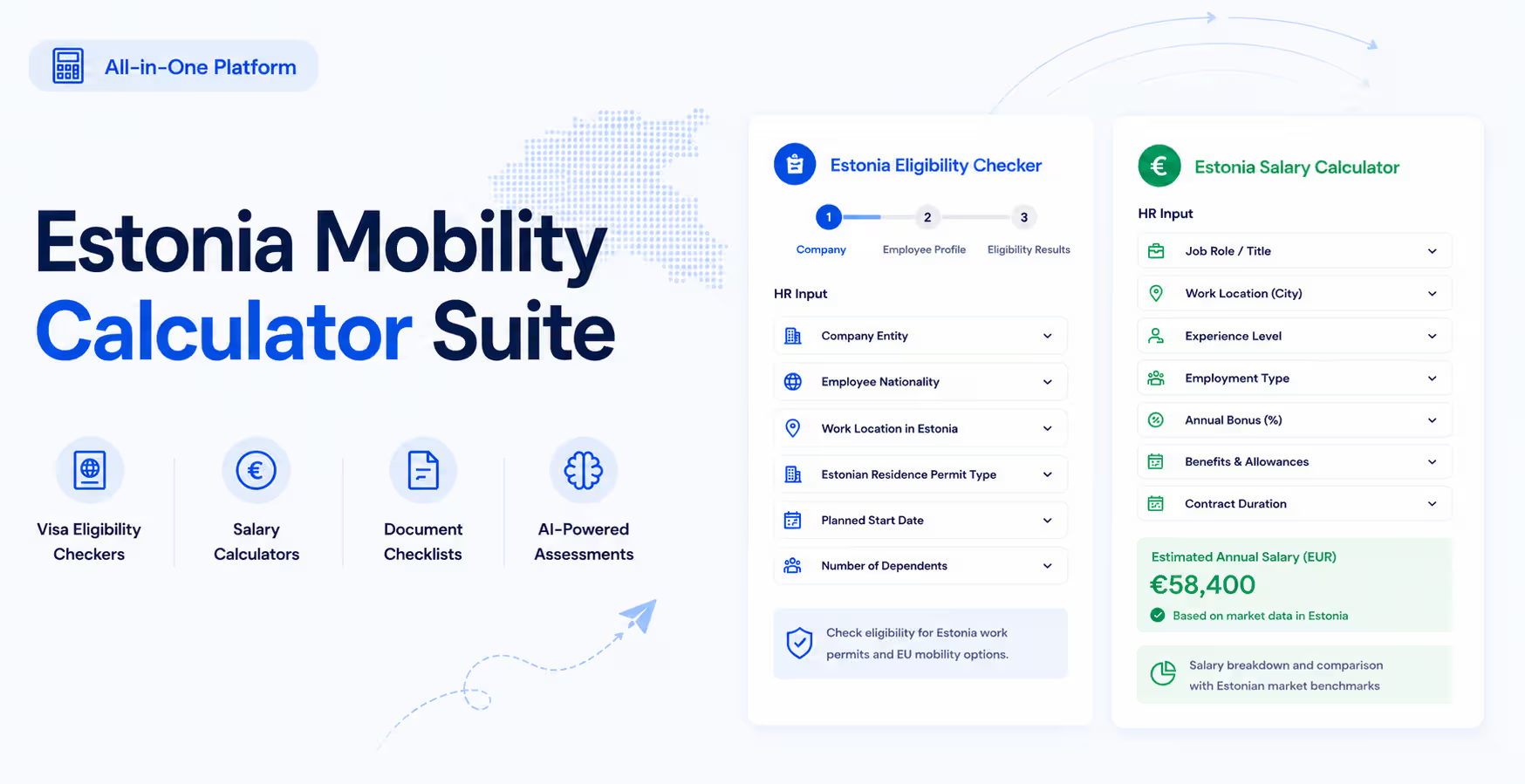





Our team handles everything, from visa processing to registering employees with Estonia’s digital residency systems, ensuring a smooth onboarding.
The Startup Visa and EU Blue Card are both great for tech workers and entrepreneurs looking to contribute to Estonia’s thriving digital economy.
Depending on the visa, approvals generally take between 4 and 10 weeks. We help fast-track where possible and keep everything on track.
Documents include a valid passport, completed application form, recent passport photo, travel medical insurance, invitation letter from an Estonian company, proof of financial means, accommodation proof, and a cover letter from your employer (if applicable).
Non-EU/EEA/Swiss citizens from countries without a visa-free agreement with the Schengen Area need an Estonia Business Visa for short-term business activities. EU/EEA/Swiss citizens and visa-free countries (e.g., US, UK, Canada) can stay up to 90 days without a visa.
The Schengen Business Visa fee is approximately €80. National D-type visa fees range from €100-€120. Additional costs may include document translation or legalization. Check with the Estonian embassy for exact fees.
A Schengen C-type Business Visa is for short stays (up to 90 days in 180 days) for business activities. A National D-type Visa is for longer stays (up to 365 days) for work, business, or other purposes.
For short-term startup activities (e.g., meetings), a Schengen Business Visa is suitable. For establishing a startup, consider the Estonia Startup Visa, which requires a business plan and committee approval.
Family members cannot get dependent visas for short-term Schengen Business Visas but can visit for up to 90 days under the Schengen visa waiver if eligible. For long-term stays, apply for family reunification visas.
Processing typically takes 2 weeks to 30 days, depending on embassy workload and document completeness. Early application submission by HR is recommended to ensure timely approval aligned with employee start dates.
The Estonia D-Visa is a national long-stay visa allowing non-EU/EEA citizens to stay in Estonia for up to 365 days within a 12-month period. It supports work, study, business, research, family reunification, and digital nomad purposes. The visa also allows limited travel within the Schengen area for up to 90 days per 180 days.
Financial requirements vary by visa type: for work visas, proof of legal income aligned with Estonian salary thresholds; for digital nomads, minimum funds of around €4,500 per month; and other purposes have specified minimum amounts (e.g., €800 for studies). HR should verify correct amounts to avoid delays.
Family members can obtain a D-Visa for accompanying employees but must provide additional proof of relationship and financial means. Their visa allows stays aligned with the employee’s visa duration.
Applicants may appeal refusals within 10 days to an administrative court. HR can assist employees in preparing appeals or reapplications.
HR can provide guidance on document preparation, connect employees with immigration experts, assist with submission logistics, and clarify rights and obligations under Estonian law to facilitate a smooth process.
It is the process of extending an existing temporary or permanent residence permit to maintain legal residence and work authorization in Estonia for foreign employees beyond the original permit expiry.
Applications must be submitted at least 2 months before the current permit expires to ensure continuous legal status, and no later than the permit expiry date. Late renewal may result in legal complications.
Required documents include a completed renewal application form, valid identity document, recent photo, proof of ongoing employment or legal grounds for residence, proof of accommodation, payment of state fees, and any updated family or personal information.
Yes, HR can support employees by tracking permit expiry dates, guiding document preparation, filing applications with authorities, scheduling biometric appointments, and providing legal assistance if needed.















.avif)